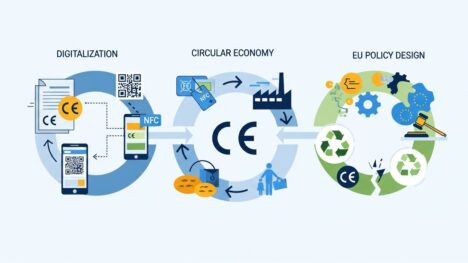


A historic step has been taken that will directly affect all manufacturers selling products to the European Union (EU) market. The EU Product Act, officially included in the EU Commission’s 2026 Work Program, aims to radically change the Union’s product management and market surveillance rules. Expected to enter into force in the third quarter of 2026, its main objective is to create a truly single market where all product data is managed using Digital Product Passports (DPPs).
The new law will revise the rules governing the marketing and placing on the market of around 85% of products on the EU market, market surveillance and product compliance management. The European Parliament has prepared a strong position paper, adopted by 505 MEPs, calling for DPPs to be phased in for products sold across the EU.
The DPP system will include harmonized information on products such as compliance, energy efficiency, sustainability performance, durability, repairability, reusability and recyclability. These passports would replace existing declarations of conformity, simplifying compliance processes and strengthening market surveillance.
The system will provide differentiated access rights to authorized customs and market surveillance authorities, as well as to repairers and refurbishers. Consumers will also be able to make more informed purchasing decisions thanks to DPPs.
Integration is critical to the success of the implementation. The EU will make the DPP registration system under development interoperable with EU Safety Gate, market surveillance systems and customs systems through machine-readable data for automatic marking of unsafe products. Implementation will be phased in to give economic operators time to adapt, while SMEs will be provided with tailored assistance and capacity building tools. With this move, the EU aims to support circular economy business models while maintaining product safety standards.
For more information: EU Product Act