
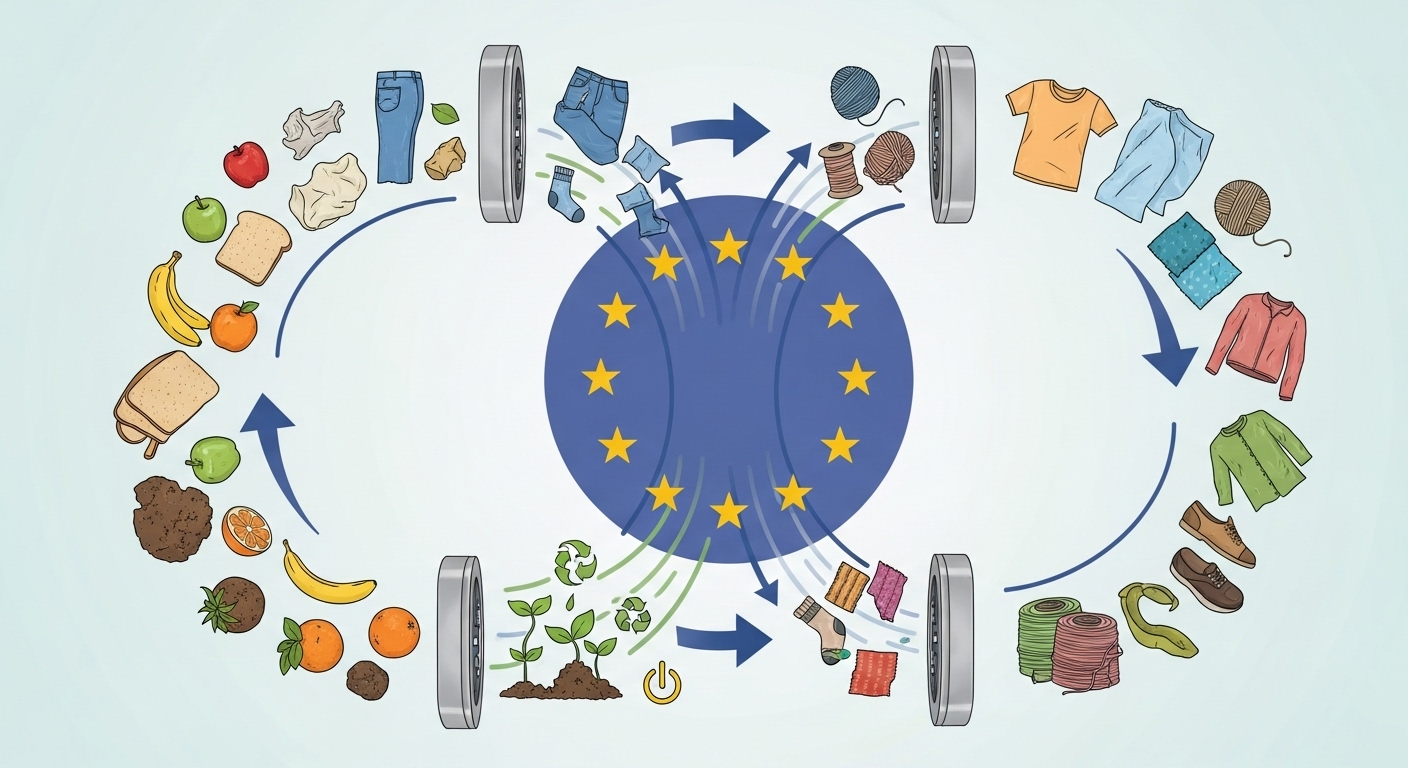
The European Union is undertaking a comprehensive revision of the Waste Framework Directive to increase environmental sustainability and ensure resource efficiency. The new draft, presented on July 5, 2023, focuses in particular on resource-intensive sectors such as food and textile waste. It aims to reduce waste generation and improve recycling processes, in line with the European Green Deal and the Circular Economy Action Plan.
For food waste, there is a target of 10% reduction in the processing and production phase and 30% per capita reduction in the retail and consumption phase by 2030. Parliament has proposed to increase these rates to 20% and 40% respectively. Countries are also expected to take measures to facilitate food donations and identify and hold accountable economic actors that cause food waste.
As for textile waste, mandatory and harmonized Extended Producer Responsibility (EPR) systems are envisaged to be established in all EU countries. These systems include producers covering the costs of collection, sorting and recycling, taking measures against fast fashion practices and excluding reuse activities from the scope of EPR. The new rules cover products such as clothing, accessories, footwear, bedding and kitchen textiles, while the application period for micro-enterprises is extended. This revision will play a critical role in helping the EU achieve its 2030 sustainability goals and contribute to a more environmentally and economically balanced waste management system.
Related Posts


New EU Regulation on Textile Waste: Producer Responsibility Increases
The European Parliament has approved an important regulation to reduce textile waste in February 2025.…